I remember waking up one summer’s morning, half-asleep, doing the first thing that I always do to my own detriment: grabbing my phone and opening Instagram. I first scrolled through Reels my friends had sent me the night before, then slid over to TikTok — out of my own poor muscle memory. Without meaning to, I realised most of what I was watching wasn’t real at all: AI filters, AI outfits, AI voices stitched onto familiar faces. What used to be a feed of memes, last night’s party photos, and holiday snaps had turned into an archive of machine-made images and nonsensical videos.
So naturally, I started to think about why and how this all really came to be the way it is. Why is it that my entire feed is embedded in AI algorithms? Has this been a result of my own unconscious decisions? How exactly does this affect me, my friends, or even my family? I had seen everything from attractive influencers to Gen-Z-targeted advertisements incorporating AI in a satisfactory, cool-esque Internet way, ultimately pushing for a product or a service to sell without batting an eye at its purpose. I realised I had subconsciously accepted AI’s identity to existentially be equivalent to that of an artist. I was surrounded by piles of garbage, grotesque interpretations claiming to hold the same power as art’s intellectual property can.
I felt both disdain and frustration. I imagined myself to have been spiritually “vacuumed.” I had lost touch with the idea that it is ok to be bored; that boredom is preferable to the emptiness of algorithmic abundance. A quote that has stuck with me for years comes from Madame de Staël’s famous letter to Claude Hochet (c. 1800): “One must, in one’s life, make a choice between boredom and suffering.”
Boredom used to be part of the craft—it’s that awkward silence where an idea is forced to appear. Staël framed life as a choice between boredom and suffering, and creativity has always lived somewhere between the two. She essentially saw boredom as a profound state of ennui, and she viewed suffering — or the process of engaging with challenging experiences — as a more active way of life, thus a less existentially grim alternative to spend your days. AI promises an escape from both: no waiting, no wrestling or even risk of failure, just a flow of continuous infinite outputs. The result is far from liberation; it’s weightlessness. The artist no longer sits through long nights sketching, doubting, or scrapping ideas; they type a prompt and receive a neatly packaged “design.” On the surface, this feels like satisfaction. But without boredom or suffering, what remains is a flattened creativity—images with no identity behind them.
Essentially, AI is intrinsically at odds with the conditions creativity requires to flourish. Sure, you’ll come across headlines under big names praising it for speeding up projects, organising decision-making, and many other things, but the truth is that optimisation isn’t imagination. AI predicts the most plausible next thing, yet creativity risks the least plausible one. One flattens variance into pattern, the other lives in friction and doubt.
Art is not a birthright or an innate talent. Art is the courage to keep trying. Humans are meant to learn, miss, mend, and try again. Perfection in art does not exist; it’s an expression of what it is to be human—a confirmation that someone else has felt this way before. It’s boredom endured long enough for an idea to arrive, and the small suffering of showing up again when it doesn’t. When we value something, whether it is because of its style, quality, or originality, we are cherishing the record of all the attempts and edits it took to make it right. Art is recognition and relief; AI produces content, not art.
Music belongs in a place where there are hearts beating, and brains dreaming, and people falling in love, and people crying, and people wondering what the hell to do or wanting to fly. It really belongs to human lives. Music is in all of us.
—Jeff Buckley
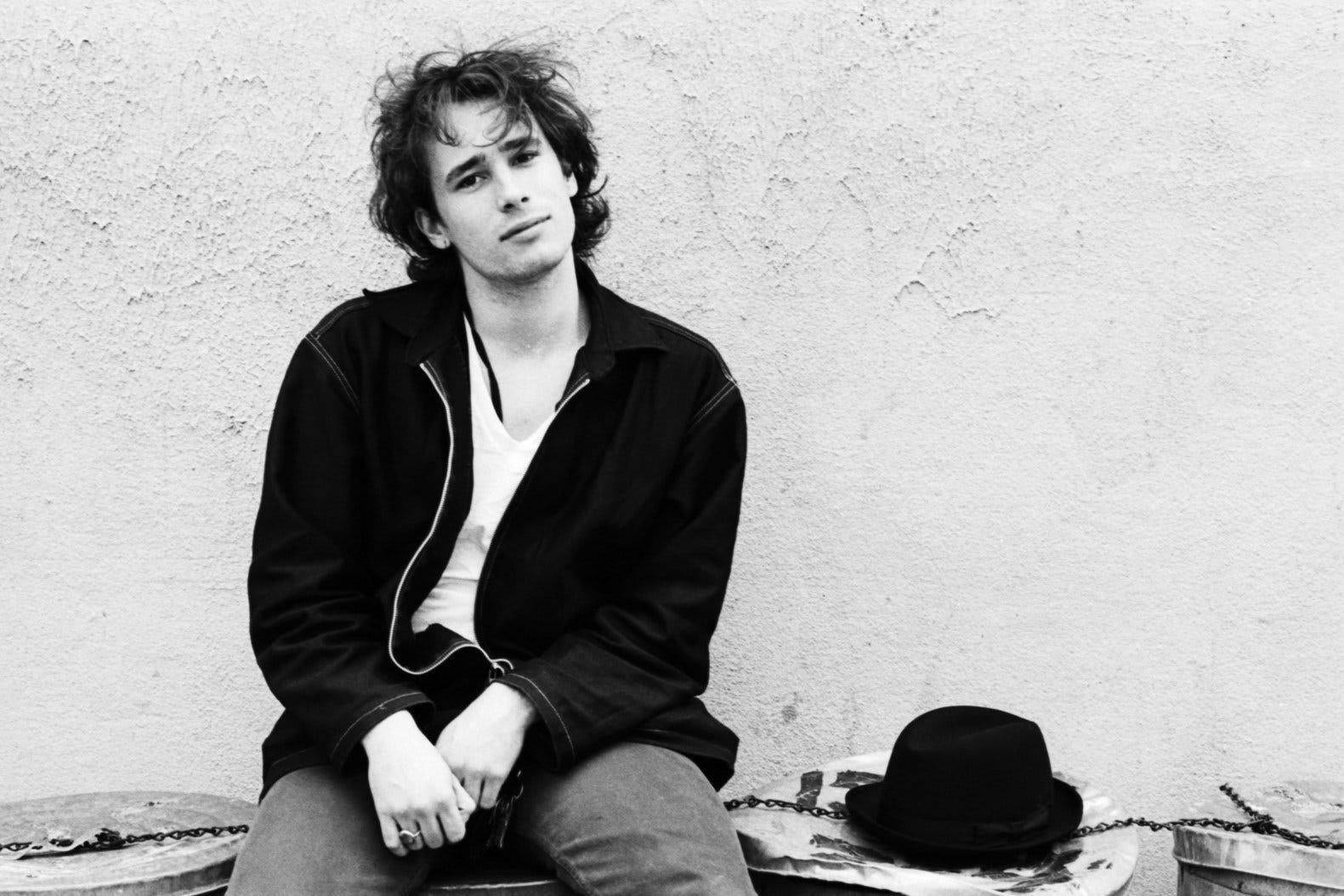
What is so bad about AI in creative work?
There’s a stark difference between AI as a resource and AI as a creator. I’m not anti-technology, nor am I against the use of AI in academic and professional fields. It is inevitable that in the following decades, AI will become more than an integral part of our lives, so it is important to understand the boundaries of where it helps our work and where it endangers it.
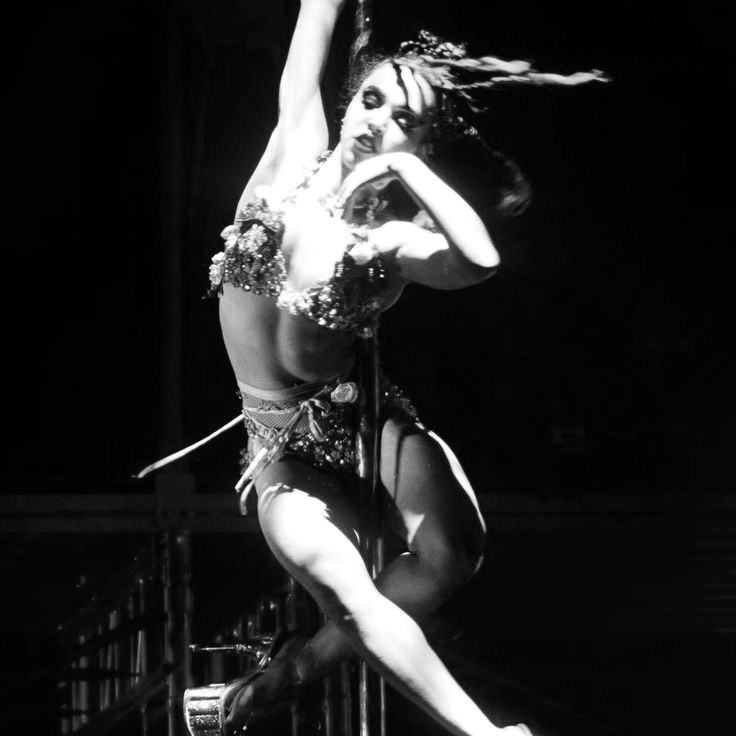
FKA Twigs is the kind of multidisciplinary artist who proves how much life sits inside one’s work: trained dancer, vocalist, songwriter, and director. Her debut album, LP1, made her a critical touchstone; later projects like MAGDALENE and CAPRISONGS widened her range, and “Cellophane” earned a Grammy nomination for Best Music Video. Outside music, she moves fluently through fashion and performance, most recently partnering with On as a Creative Partner, and performing for Maison Valentino SS24 Womenswear.
In April 2024, she testified before the Senate Judiciary Subcommittee on Intellectual Property. Twigs drew a clear line: the technology isn’t the enemy— losing control of it is. Her voice, movement, and image are the product of years of training and self-sacrifice; AI can’t replicate that journey, but it can mimic her likeness and misappropriate her identity and IP without consent. She urged lawmakers to avoid repeating the early Internet era’s mistakes and to legislate for consent, attribution, compensation, and provenance. She noted she’s building an “AI Twigs” to consensually handle some online interactions as proof that artist-controlled tools can coexist with human authorship.
My art is the canvas on which I paint my identity and the sustaining foundation of my livelihood. It is the essence of my being. Yet this is under threat. AI cannot replicate the depth of my life journey, yet those who control it hold the power to mimic the likeness of my art, to replicate it and falsely claim my identity and intellectual property. This prospect threatens to rewrite and unravel the fabric of my very existence.
—FKA Twigs
So what is so bad about AI in creative work? Nothing— that is, until it claims the seat of the creator. When a prediction engine stands in for boredom, risk and consent, it doesn’t make art; it makes imitations with no origin. Keep authorship human. Otherwise, the algorithm wears Prada while creativity slowly dies on the rack.
The social costs of AI
The scary, almost cataclysmic part of AI is that we are the first to witness its consequences. For centuries, progress and change have required time to form— ironically, they moved at human speed. In practice, this means that before we had what we have now, it existed in a much more unglamorous version. If everything must be instantly understood, the rehearsal is cut short. AI gives you a polished surface before you’ve had time to build a structure underneath, which is why so much of social media reads as buzz— loud yet brittle. And once we’re overfed on that diet, we can’t go back. The more we consume, the less we appreciate; the more we scroll, the less we see; the more we optimise for speed, the less we can tolerate silence. A culture trained to expect instant polish forgets how to recognise the hardships in work.
Fashion has become much more consumption driven so it must be easier to be understood. We just are consuming visuals, and we don’t really have the time to go deep into the clothes, the storytelling, the construction, where it comes from— it just needs to be a hit. It gets a bit more superficial.
—Glenn Martens, on the BoF Podcast
This logic doesn’t stop at clothes. When everything is optimised to “hit”, depth becomes surplus to requirement. Things are designed to read quickly, so construction and aftertaste get sidelined. Homogeneity scales, because systems trained on engagement keep serving the median back to us. Provenance and credibility dissolve; references arrive without lineage. Labour goes invisible when years of training are replaced by minutes of output. And pace becomes politics: slow work — apprenticeship, research, rehearsal.. — looks inefficient next to instant results.
I’m not outside this. I catch myself saving images I can’t attribute, mistaking legibility for value, feeling the tug to make something land now rather than letting it breathe. AI strengthens that tug: there’s always another variation, another near-perfect image, or another plausible answer that arrives before I’ve had time to ask myself a better question. My work gets thinner when I obey that speed and deeper when I sit with the wrong version longer than is comfortable.
The point isn’t to ban AI. It’s to recognise that time is a creative material. You can compress logistics, but you can’t compress becoming. If AI belongs anywhere here, it’s in clearing space for judgement and taste, not replacing the friction that gives work its weight. My aim is simple: keep the machine in the service of the hand.
~
Manuel T. Moreno

 SOMETHING TO UNDIGEST
Leave a comment